Access to healthy ecosystems is increasingly understood as a social determinant of wellbeing, much like access to healthcare or education.
A recent European Commission study examined 64 villages in Hungary and Romania, located around 16 mid-sized cities. The research analyses the relationship between landscape characteristics, biodiversity, and socio-economic performance at village level. The villages were broadly similar in population size, settlement size, and soil quality.
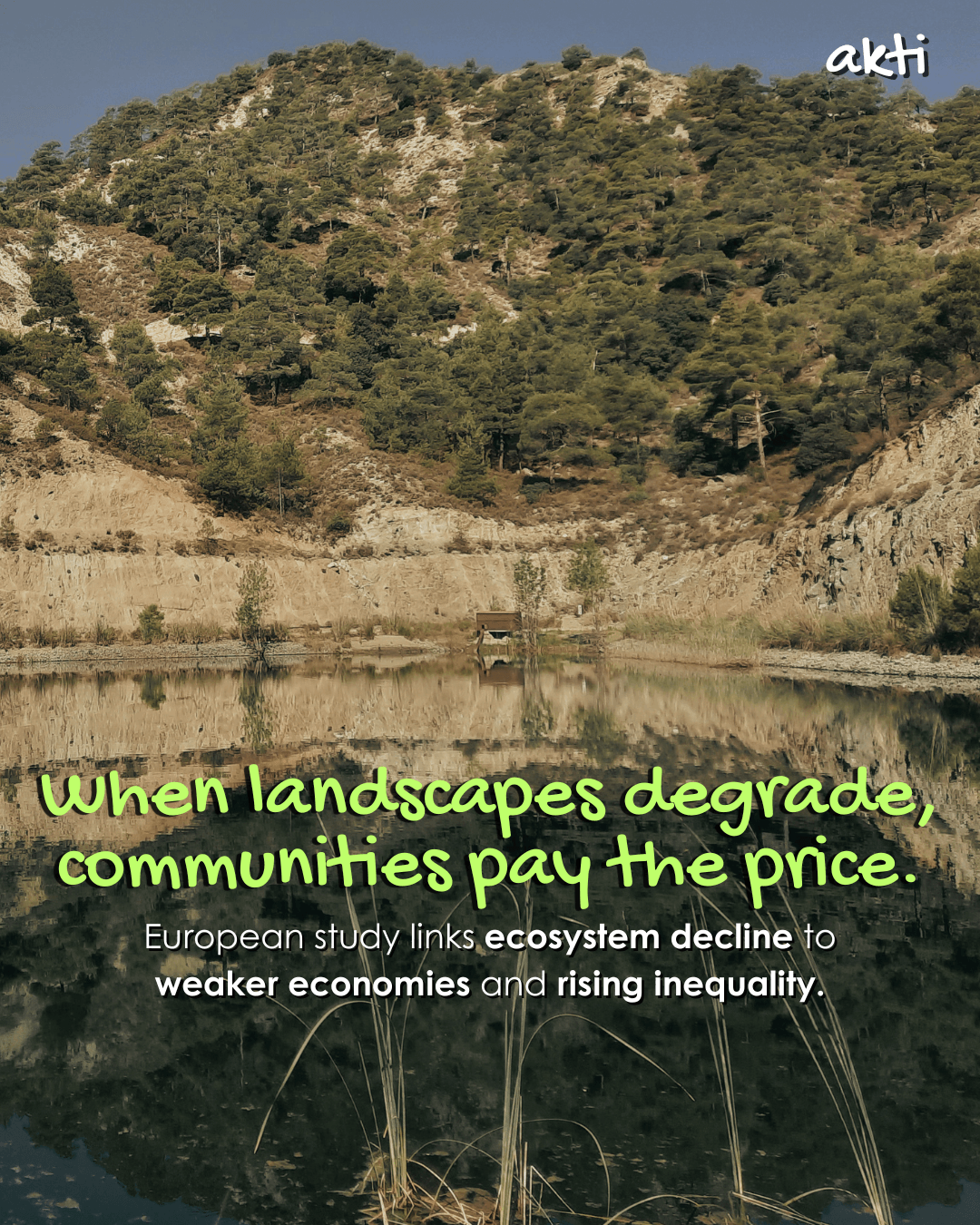
The research found that villages surrounded by richer biodiversity and more complex landscapes tend to have higher socio-economic performance, compared to communities in more degraded or human-impacted environments. This highlights how the characteristics of the surrounding landscape are closely linked to how communities perform and develop economically and socially over time.
When some communities are left with degraded ecosystems while others benefit from greener, richer environments, environmental inequality becomes visible and measurable.
It is not only about ecosystems. It is about justice.