For the first time in history, wind and solar generated more electricity globally than gas. But Cyprus risks falling behind as the world accelerates into a historic renewable energy transition.
In April 2026, wind and solar produced 22% of global electricity, overtaking gas at 20%.*This shift happened because renewable technologies became dramatically cheaper, faster to deploy and increasingly critical for energy security. Solar panel costs alone have fallen by almost 90% over the last decade.
Europe is already experiencing this transition at scale. In 2025, wind and solar generated more electricity than fossil fuels across the EU for the first time ever.
And Cyprus? Cyprus is producing more solar electricity than ever before.Yet large amounts of this clean energy still cannot fully enter the system.
Because Cyprus remains electrically isolated, lacks sufficient energy storage and still depends heavily on oil-fired power plants to stabilise the grid, renewable electricity is increasingly being “curtailed”, meaning deliberately reduced or shut down to avoid grid instability.
The numbers are alarming.Renewable energy curtailments in Cyprus increased from 3.3% in 2022 to almost 29% in 2024, according to CyprusGrid analyses based on publicly available operator data (PV Magazine, 2025).
In the first half of 2025 alone, Cyprus had already curtailed as much renewable electricity as during the whole of 2024 (Balkan Green Energy News, 2025).At the same time, Cyprus continues paying hundreds of millions of euros annually through carbon emission costs linked to fossil fuel dependence, costs that ultimately pass to citizens through electricity bills.
This is the real challenge of the next energy era for Cyprus: While the world accelerates into a historic renewable energy transition, Cyprus risks falling behind, not because it lacks sun or renewable potential,but because infrastructure, storage systems, electricity grids and energy governance are not evolving fast enough to support the transition.
*The analysis is based on reported data from 36 countries and conservative estimates for countries yet to publish April figures.
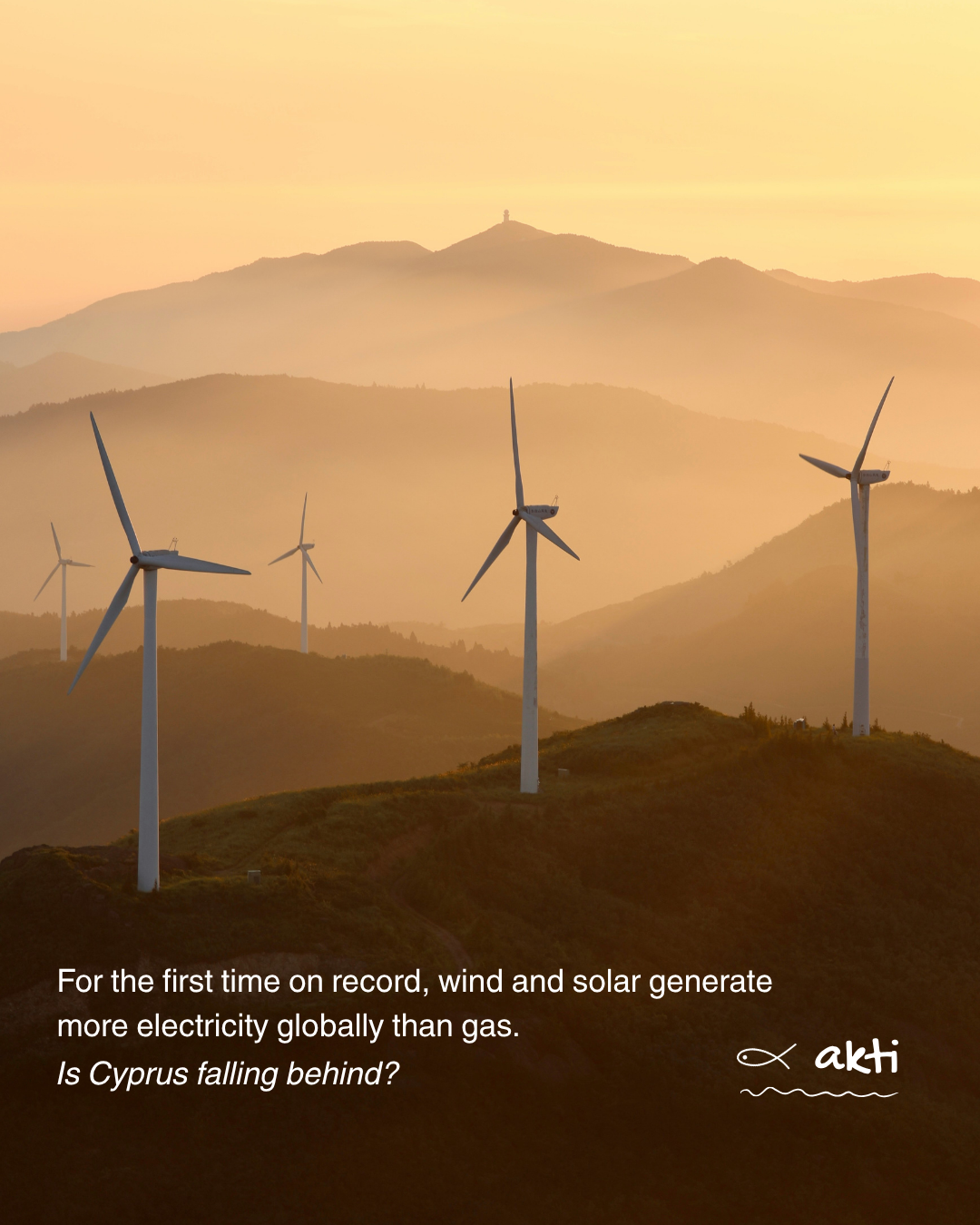
Photo by Cristofer Maximilian on Unsplash